


30 Aug. 26
Well Water Testing Before Softener Systems in San Antonio
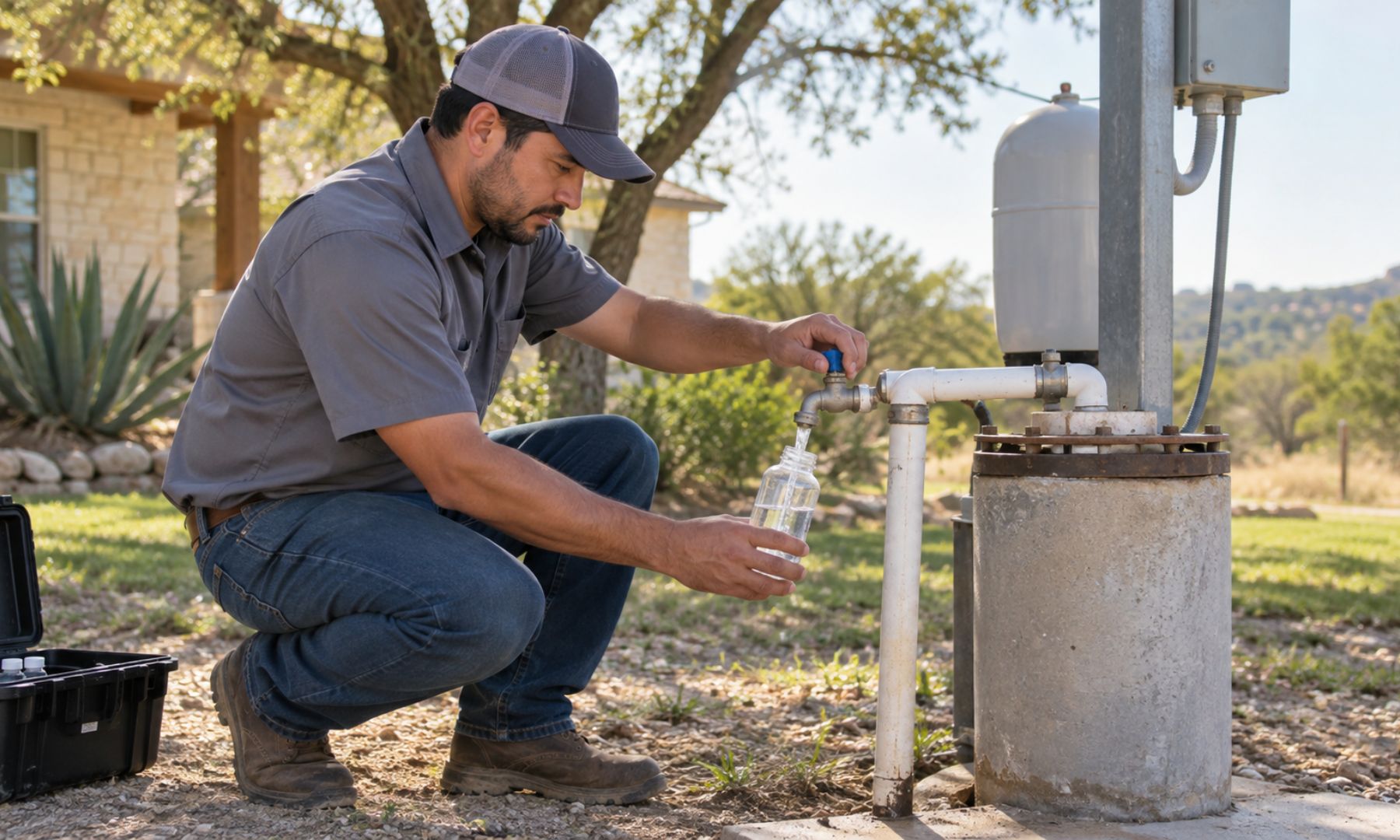
Choosing a well water softener in San Antonio should begin with a water test—not a piece of equipment.
Unlike municipal water, private well water can vary from one property to another. One home may mainly have hard water, while another may have iron staining, sediment, sulfur odor, or several concerns at once. Testing helps identify those conditions before a treatment system is selected.
What Well Water Testing Can Reveal
A well-water evaluation can help determine what the system needs to address.
Hardness
Dissolved calcium and magnesium can create scale on faucets, plumbing, shower glass, and water-using appliances. A water softener is designed to reduce hardness, but test results and household water demand help determine the appropriate size.
Iron
Iron may cause orange or brown stains, discolored water, or a metallic taste. A softener can help with limited amounts of certain forms of iron, but other conditions may require dedicated iron filtration.
Sulfur-Like Odor
A rotten-egg or sulfur smell in water is often associated with hydrogen sulfide, although odors can have different causes. The source should be evaluated before treatment equipment is chosen.
Sediment and Other Concerns
Sand, silt, rust particles, manganese, pH, and possible microorganisms may also affect system design. Not every basic water test covers every concern, so homeowners should mention changes in taste, odor, color, or clarity.
Why Treatment Order Matters
A water softener primarily addresses hardness. It is not a universal filter or disinfectant.
When iron, sediment, odor, or other conditions are present, the water may need treatment before it reaches the softener. Depending on the results, a well water treatment system might include:
- Sediment filtration
- Iron filtration
- A chlorination system
- A retention tank
- A water softener
- Additional drinking-water treatment
Not every property needs all of these components. The correct equipment and treatment order depend on the water analysis, flow requirements, plumbing, household demand, and installation conditions.
Questions to Ask Before Choosing a System
Before purchasing well-water equipment, ask:
- Has the water been tested recently?
- Are hardness, iron, sediment, or sulfur odor present?
- Does the water need treatment before the softener?
- Is the equipment sized for the home’s water use and flow needs?
- Where will the equipment be installed?
- What routine maintenance will be required?
- Is certified laboratory testing needed for drinking-water safety?
These questions can help homeowners understand why each component is being recommended.
Start With Testing, Not Guesswork
Buying equipment before testing can result in a system that addresses the wrong problem, requires unnecessary maintenance, or needs additional components later.
Simple Water Softeners designs well water systems around the conditions at each location.
Contact Simple Water Softeners or call (210) 960-2555 to schedule a water test before choosing equipment for your San Antonio-area well.
Frequently Asked Questions
Why should well water be tested before buying a softener?
Testing identifies hardness and other conditions that may affect the type, size, and treatment order of the system.
Can a water softener remove every well-water problem?
No. A softener primarily reduces hardness. Iron, sediment, sulfur odor, microorganisms, and other concerns may require separate treatment.
Does every well need an iron filter or chlorinator?
No. Equipment should be selected according to the water-test results, property conditions, and treatment goals.