


Choose the Water Softener That Fits Your Home
You want a solution that matches your water usage, your household size, and your long-term needs. A single tank system can be a smart choice for smaller demands, while a dual tank system gives you continuous soft water even during regeneration. When you contact our company, you get expert guidance to help you select the right system without guessing.
Single vs Dual Tank Water Softeners
When Marlon started noticing hard water in his morning shower again, he assumed it was just a minor issue with salt levels. In reality, the problem was his misunderstanding of how his water softener worked: a single-tank system can stop delivering soft water during regeneration, which is exactly when many homeowners discover unexpected scale, soap that won’t lather, and appliance damage over time. Knowing the difference between single and dual tank water softeners is essential not only to fix these issues, but also to prevent them from coming back. Read the full article to understand which system best fits your home and why that choice matters.
Choosing Between Single-Tank and Dual-Tank Water Softeners: Key Differences, Efficiency and Performance
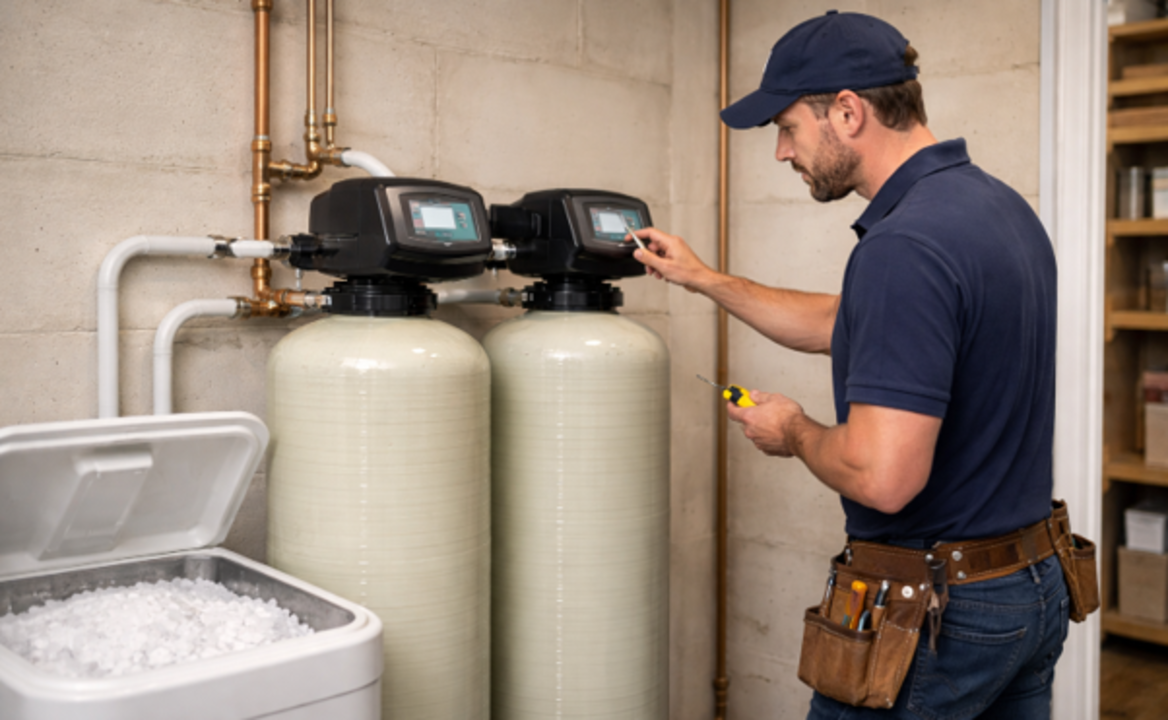
The precise arrangement of the tanks used to oversee the ongoing removal of hard minerals from the household supply is crucial to the reliable operation of the purification infrastructure in the field of contemporary home water conditioning. This crucial plumbing network depends on the basic distinctions between using a single resin vessel and a twin-tank configuration, ideas that are often misinterpreted by proactive homeowners who only want to avoid scale accumulation in their pipes without fully understanding the unique volumetric capacities and regeneration cycles inherent to each design. When choosing the best hardware strategy for a household’s specific daily usage patterns, it is essential to carefully observe how each configuration handles the chemical backwashing process in order to fully comprehend how continuous flow and downtime constraints interact to determine the ultimate softness of the water output.
In the end, this meticulous capacity planning is what guarantees dependable appliance protection and prevents the frequent error of installing an undersized or mismatched system that could result in unexpected hard water slipping through the lines rather than addressing the critical need for continuous treated water delivery over the long term, which essentially secures a stable plumbing environment and lower maintenance costs.
Despite his newly purchased home coming equipped with a water conditioning unit, Marlon noticed that the water during his morning showers frequently felt harsh and made it difficult to lather soap, especially right after the system ran its overnight flushing cycle. He spent a morning checking the bathroom fixtures, assuming the sudden return of hard water stains was just a brief dip in salt concentration that could be ignored. However, he soon discovered that the mechanical assembly was limited by the design of its single resin tank, which could not provide soft water while simultaneously flushing its depleted media. Caught between a growing buildup of calcium deposits on his glass doors and the realization that his plumbing infrastructure required a different capacity strategy, Marlon consulted a local specialist. The expert explained the operational differences between his current single-cylinder unit and a dual-tank continuous-flow alternative to address his concerns. Knowing that a dual configuration could manage the mineral balance without interrupting the soft water supply to his taps, this discovery allowed him to solve his capacity problems and appreciate his renewed living environment.
Operational Mechanics of Single Tank Systems
The standard single tank water conditioning system, which serves as the traditional and fundamental baseline for residential mineral removal by utilizing one primary cylinder to house the softening resin alongside a separate brine container, is where the basic understanding of intricate ion exchange mechanics typically begins for the vast majority of proactive property owners. Through the strategic and continuous monitoring of an internal control valve equipped with a specialized digital flow meter, the system calculates the exact volume of water processed and schedules a strictly necessary regeneration cycle, usually during the quiet late-night hours, to refresh the exhausted internal media without disrupting the busy daily routine of the household (source: Water Quality Association, 2024).
Consequently, this traditional unit functions as an incredibly reliable protective measure that effectively removes calcium and magnesium during its normal operation, but it inherently possesses a distinct structural limitation because it must completely bypass the softening circuit and allow hard water into the domestic lines if a faucet is opened while the machine is actively cleaning itself. Relying on this solitary resin bed necessitates an exact initial programming setup based on the specific municipal water hardness and the daily number of occupants, since a thorough comprehension of the system’s absolute capacity guarantees that the regeneration schedule triggers smoothly long before the media is entirely depleted and compromises the pipes with scale. By managing the continuous softening process and the inevitable downtime through careful mathematical timing rather than the simultaneous operation of multiple tanks, this methodical approach to single-cylinder management turns the potential leakage of hard water into a completely predictable and manageable exterior routine for smaller households with very consistent usage patterns. The inescapable need to anticipate future consumption forces these specific systems to always maintain a calculated safety reserve margin, meaning they frequently initiate their laborious saltwater cleaning cycle when they still retain a significant fraction of their original softening capacity, preemptively ensuring that the family never wakes up to untreated water in the primary showers or sinks during the busiest mornings of the month.
Continuous Supply with Dual Tank Configurations
The dual tank conditioning system, which acts as a robust continuous-supply mechanism by incorporating two separate resin vessels masterfully connected to a single alternating control head, comes into sharp focus when a household demands uninterrupted soft water regardless of the time of day or the extreme volume being consumed at that precise moment. Modern twin-cylinder units use a sophisticated flow meter to monitor the exact gallon usage, instantly switching the active water flow to the secondary standby tank the exact moment the primary tank completely exhausts its softening capacity, which guarantees that the residential supply remains fully treated while the depleted tank undergoes its necessary and deep brine regeneration (source: National Sanitation Foundation, 2023).
The main and most prominent function of this alternating configuration, according to the professional plumbing engineers who design these networks, is to produce an abundant and endless saturation of soft water that entirely eliminates the need for a wasted reserve capacity or restrictive late-night backwash schedules, allowing the system to clean itself efficiently using fully softened water drawn directly from the active twin. It is practically assured that the entire water treatment loop will remain completely secure and fully operational for many decades without the slightest risk of hard water insidiously slipping through the pipes during heavy usage days if the property owner requires a high-demand solution for large families or homes with multiple high-flow fixtures operating at once. Residents create a mineral management network that continuously respects the property’s fluctuating demands while performing a genuinely necessary purification service entirely out of sight of the residents without ever compromising the excellent quality of the liquid by smoothly and frictionlessly combining these parallel treatment tanks under the control of a single smart valve. No matter how unusual or unpredictable the family’s consumption pattern may be, this uninterrupted capability not only significantly enhances the user experience by providing treated water on continuous demand, but it also actively protects delicate internal appliances, like water heaters and dishwashers, by ensuring that they never receive a single drop of liquid loaded with destructive minerals.
Salt Efficiency and Water Consumption Variations
The overall efficiency with regard to salt consumption and wastewater generation, where the real economic and ecological differences between the two primary configurations become notably apparent, is an absolutely critical factor in the final selection process for any long-term residential water mitigation strategy that seeks true sustainability. Single tank setups typically program a cautious reserve capacity into their daily calculations, meaning they frequently regenerate long before the resin is completely exhausted to ensure soft water is always available the very next day, which inadvertently wastes a small percentage of viable salt and flush water during each premature and repetitive cycle throughout the year.
In contrast, dual tank systems utilize the absolute entirety of the resin bed in the active cylinder before making the mechanical switch, ensuring that every single grain of softening capacity is pushed to its maximum limit before the regeneration sequence is ever initiated, thereby very significantly reducing the annual consumption of sodium pellets and the enormous volume of salty wastewater discharged directly into the municipal drain (source: Environmental Protection Agency, 2024). By intelligently ensuring that the regeneration process only occurs with pinpoint precision when mathematically required by the flow meter and by utilizing high-quality soft water to clean the standby tank, the dual setup facilitates these natural flushing rhythms with astonishing efficiency, easily avoiding the common and annoying problem of excessive salt purchasing and frequent manual refills of the brine tank. To definitively ensure that the chosen softener will operate in perfect physical and mechanical harmony with the ambitious ecological goals of the modern home, the safest and most logical course of action for any responsible resident is to honestly evaluate their actual daily water consumption against the operational footprints of both single and dual systems before committing to an expensive permanent installation. In the long run, this meticulous attention to operational efficiency not only considerably reduces ongoing maintenance expenses and utility costs, but it also minimizes the environmental impact of the property by preventing the unnecessary dumping of chlorides into the sensitive local sewer system, proving that careful planning benefits both the domestic infrastructure and the outside environment.
Conclusion
Carefully choosing a domestic water conditioning system based on a precise evaluation of household demand and operating efficiency is a reasonable approach to modern property management. Residents may safely permit continuous mineral removal, maximize salt consumption, and shield their internal plumbing from scale buildup without needless maintenance effort by comprehending the mechanical variations between single and alternating dual tanks.
- Single tank systems provide reliable softening for households with predictable usage by scheduling regeneration cycles during periods of low demand, though they cannot provide treated water while actively cleaning the resin.
- Dual tank configurations guarantee a continuous supply of soft water by immediately alternating to a standby resin vessel the precise moment the primary cylinder reaches its maximum processing capacity.
- Alternating twin systems generally offer greater salt and water efficiency because they fully deplete the active resin bed before regenerating, whereas single units often flush prematurely to maintain a safety reserve buffer.
Frequently Asked Questions about Differences Between Single-Tank and Dual-Tank Water Softeners
How does a single-tank system determine the exact time to schedule a regeneration cycle?
The system monitors consumption using an internal control valve equipped with a specialized digital flow meter. This device calculates the precise volume of water processed and proactively schedules the cleaning cycle before the resin capacity is completely depleted.
How does a dual tank water softener manage to provide a continuous soft water supply?
It utilizes two separate resin cylinders connected to one alternating control head; when the first tank is completely exhausted of its softening capacity, the valve instantly redirects the incoming water to the second tank while the first one cleans itself.
Why are dual tank systems generally considered more efficient with salt usage?
They are more efficient because they do not need to calculate a safety reserve margin; they completely exhaust the resin in the active tank before switching and regenerating, which prevents the wasting of salt and water on partially depleted media.
The right water softener is not simply the one with the lowest upfront cost, but the one that matches household demand with precision. Single tank systems remain practical and reliable for smaller homes with stable routines, but they cannot deliver treated water during regeneration. Dual tank systems offer continuous soft water, improved efficiency and better performance for larger or more demanding households. In the end, the best choice depends on usage patterns, efficiency expectations and the level of protection you want for your plumbing and appliances. Making that decision with clarity ensures better water, lower maintenance and stronger long-term value.
Maximize Your Water Softener’s Potential – Request a Free Estimate Today
Please use the form below to request a free estimate and we’ll be back in touch with you as soon as possible. Alternatively you can give us a call at (210) 960-2555 for immediate Pricing and scheduling.