
Simple Water Softeners
  • Img
    email us
    lisa@simplewatersofteners.com
  • Img
    Call Us

    (210) 960-2555

Simple Water Softeners
  • WHY SIMPLE?
  • RESIDENTIAL
    • Size Calculator
    • Simple 30
    • Simple 45
    • Simple 60
    • Simple 80K Best Water Softener System for Home in San Antonio Texas
    • Simple Twin 30 Water Softener System for Home
    • Simple Twin 45 – Best Water Softener System for Home
    • Simple Twin 60 Water Softener System for Home
    • Simple Premier 30K Whole House Filtration & Water Softener
    • Simple Premier 45K Whole Home Water Filtration and Softener Solution
    • Whole Home Water Filters
    • Gallery Installations
  • COMMERCIAL
  • REVERSE OSMOSIS
    • Simple Water Maker
    • Filters of Reverse Osmosis Water Softener System
  • WELL WATER
    • Iron Filtration in Well Water Softener System
    • Chlorinator in Well Water Softener System
    • Retention Tanks in Well Water Softener System
    • Best Well Water Softener in San Antonio Texas
  • SERVICES
    • Water Softener Installation Near Me in San Antonio Texas
    • Water Softener System Maintenance and Repair in San Antonio Texas
    • Parts of Water Softener Commercial and Home System
    • Salt for Water Softener System
    • Water Hardness Calculator
  • CONTACT
  • BLOG
Free Estimate
  1. Home > BLOG > New Water Softener

27 Mar. 2026

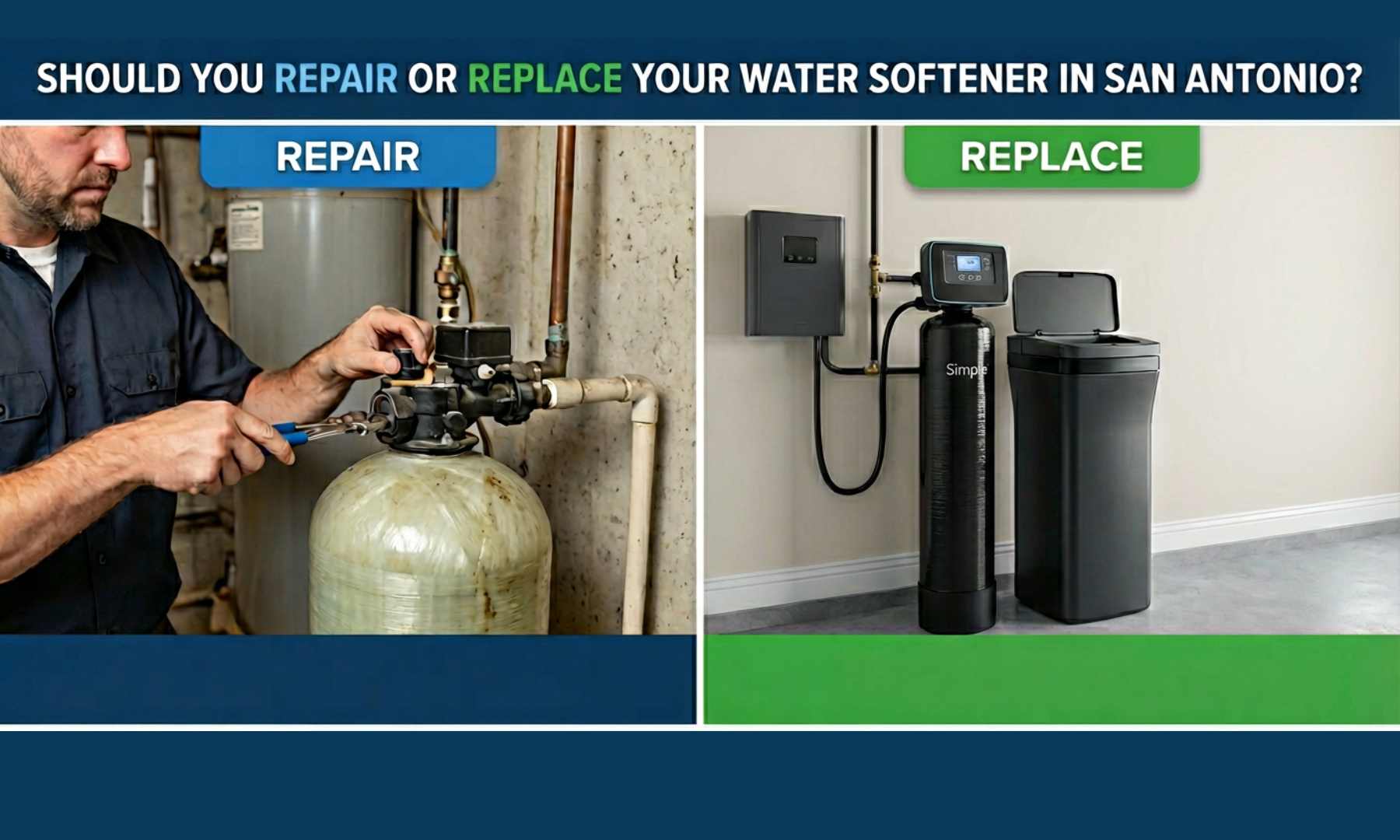
Should You Repair or Replace Your Water Softener in San Antonio?

Should You Repair or Replace Your Water Softener in San Antonio?

If your water softener has stopped working the way it should, you may be wondering whether it is worth repairing or if it is time to replace it. For homeowners in San Antonio, that is an important decision. San Antonio Water System says the city’s water typically measures 15 to 20 grains per gallon, which means local water softeners have to work hard year-round. SAWS also says hard water is not a health hazard, but it can create ongoing scale buildup and maintenance problems in the home.

At Simple Water Softeners, we help San Antonio homeowners make the right call based on the age of the unit, the type of problem, repair frequency, and how well the system is actually handling the home’s hard water.

In many cases, a repair is the right move. In others, replacement is the smarter long-term investment.
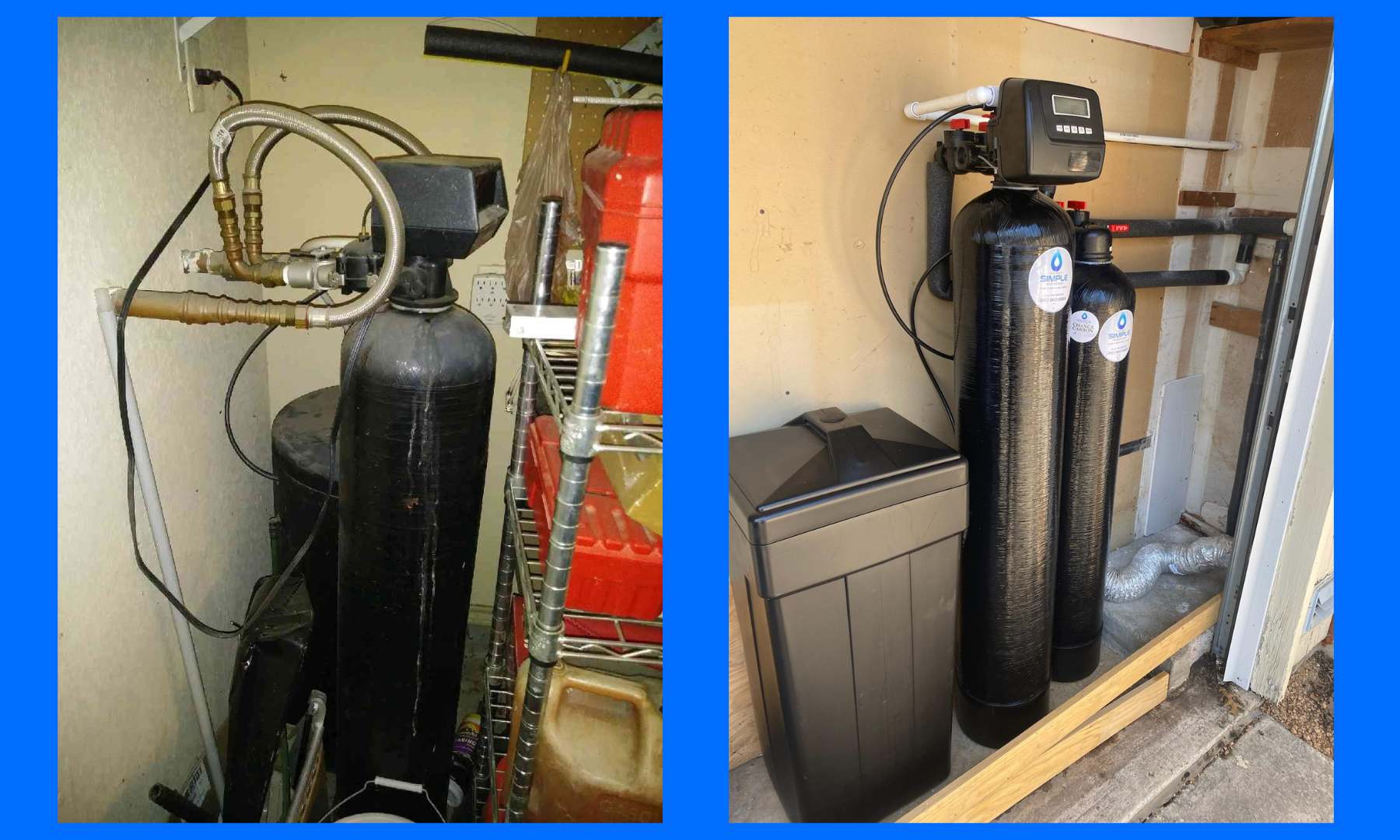
Why this matters in San Antonio

San Antonio homeowners deal with some of the hardest municipal water in Texas. According to SAWS, typical water hardness in the local supply ranges from 15 to 20 gpg. SAWS serves more than 2 million customers in the San Antonio region, so this is a widespread issue for local homes, not just an isolated neighborhood problem.

When a water softener starts failing in San Antonio, the effects can show up fast:

  • white scale on faucets and shower glass
  • soap scum that gets worse
  • cloudy dishes and stiff laundry
  • more buildup inside water heaters and appliances
  • more cleaning and maintenance around the home

That is why waiting too long to address a failing system can end up costing more in the long run.

Signs your water softener may only need a repair

Not every softener issue means the system is done. In many cases, a targeted repair can restore performance.

1. The system is still relatively new

If your water softener is not very old and has otherwise performed well, repairing it is often the better value.

2. The problem is isolated

Some of the most common service issues are limited to a single part or setting, such as:

  • a stuck valve
  • a clogged injector
  • a control head problem
  • incorrect regeneration settings
  • salt bridging in the brine tank
  • minor component wear

If the core system is still in good condition, these are often repairable.

3. Hard water symptoms just started recently

If your softener was doing its job and then suddenly stopped keeping up, that usually points to a service issue rather than total system failure.

4. This is your first major repair

One repair does not automatically mean replacement. If the system has been dependable and this is the first major issue, repair is often the practical choice.

Signs it may be time to replace your water softener

At a certain point, replacing the unit makes more sense than continuing to repair it.

1. Your system is older and performance keeps dropping

An older water softener that no longer softens consistently may be near the end of its useful life.

2. You are paying for repeat repairs

If you have already fixed valves, electronics, settings, or other parts and the softener still struggles, replacement is usually the more economical choice.

3. Your home still has hard water problems after service

If you still notice mineral spots, scale, soap scum, and residue after the unit has been serviced, the system may be worn out, undersized, or simply not able to keep up with San Antonio water.

4. Salt or water use seems unusually high

A failing or inefficient system can regenerate too often, waste salt, and still leave you with hard water symptoms.

5. Your household water use has changed

If your family has grown, your water usage has increased, or you have added bathrooms or appliances, your old system may no longer be properly sized.

Repair or replace: a simple rule of thumb

For most San Antonio homeowners, the decision looks like this:

Repair your water softener if:

  • the unit is still fairly new
  • the issue is specific and repairable
  • the system has otherwise worked well

this is your first significant service issue

Replace your water softener if:

  • the unit is older and unreliable
  • repairs are becoming frequent
  • the system no longer controls hard water effectively
  • your household has outgrown the current setup

In a city where the water typically measures 15 to 20 gpg, a weak or undersized softener tends to show its limits quickly.

Common repairable water softener problems

Before you assume you need a new system, it helps to know what can often be fixed.

Salt bridge in the brine tank

A hardened salt crust can prevent proper brine production and stop the system from regenerating correctly.

Incorrect settings

A softener may appear to be failing when it actually just needs the hardness settings or regeneration schedule adjusted.

Clogged or dirty components

Injectors, valves, and control parts can get dirty over time and reduce system performance.

Resin-related performance issues

In some cases, the system can be restored with professional service instead of full replacement.

When replacement is the smarter investment

Replacement is usually the better option when you want dependable performance, better efficiency, and a system that matches your home’s needs.

A new system may be the smarter move if:

  • your current unit cannot keep up with your home’s water use
  • hard water symptoms keep returning
  • you are tired of repeated repairs
  • your water heater, fixtures, and appliances need better scale protection
  • you want a properly sized solution for San Antonio’s hard water conditions

Because local water is consistently hard, a struggling system usually does not improve on its own. SAWS says San Antonio’s water is typically in the 15 to 20 gpg range, which is enough to create constant scale issues when a home is not being softened effectively.

Questions to ask before deciding

Before choosing repair or replacement, ask these questions:

How old is the system?

Age is one of the biggest deciding factors because older units are more likely to have multiple worn components.

Is this a one-time problem or part of a pattern?

A single repair is normal. Multiple repairs over a short period usually point toward replacement.

Is the unit actually softening water?

If you are still seeing white spots, scale, soap scum, and residue, then the system may no longer be doing its job.

Is the system the right size for the house?

Some “replacement” decisions are really sizing problems. A system that was too small from the beginning may never have worked as well as it should.

Are you spending money to fix symptoms instead of solving the problem?

Sometimes the cheapest repair today leads to more cost later.

Is San Antonio water safe without a softener?

Yes. SAWS states that hard water is not a health hazard, and San Antonio’s water system has been rated superior by the Texas Commission on Environmental Quality since 1936. The reason homeowners install water softeners here is not because the water is unsafe. It is because hard water causes scale, extra maintenance, and wear on plumbing and appliances.

If your water softener is newer and the issue is isolated, a repair may be all you need. But if your unit is older, no longer keeping up, or costing you money again and again, replacement is usually the smarter long-term choice.

In San Antonio, hard water is not a rare issue. It is part of daily life for homeowners across the region. With typical hardness at 15 to 20 grains per gallon, your water softener is one of the most important systems protecting your plumbing, fixtures, appliances, and comfort at home.

Need help deciding? Contact Simple Water Softeners

At Simple Water Softeners, we help San Antonio homeowners figure out whether a repair is worth it or whether replacement is the better investment. If your system is not keeping up with San Antonio hard water, we can help you evaluate the problem and recommend the right next step for your home.

Contact Simple Water Softeners today to schedule a water softener inspection or get expert guidance on repair vs. replacement in San Antonio.

Explore More

FAQ Section

How do I know if my water softener is failing?

Common signs include white scale on fixtures, soap scum, cloudy dishes, stiff laundry, and hard water returning throughout the house.

Is it cheaper to repair or replace a water softener?

It depends on the age of the system, the type of problem, and how often repairs are needed. Newer systems with isolated problems are often worth repairing. Older systems with repeat issues are usually better replaced.

How hard is the water in San Antonio?

According to SAWS, San Antonio water typically ranges from 15 to 20 grains per gallon, which is considered very hard.

Is hard water dangerous in San Antonio?

SAWS says hard water is not a health hazard. The main concern is scale buildup, appliance wear, and extra household maintenance.

When should I replace my water softener?

You should consider replacement when the unit is older, repairs are becoming frequent, performance is inconsistent, or your home still has hard water after service.

  • By:Lisa Bauer

10 Apr. 2025

Is It Time to Upgrade Your Water Softener This Spring?

As spring arrives in San Antonio, many homeowners take the opportunity to deep clean, refresh their homes, and prepare for the hot summer ahead. But one important system is often overlooked during spring maintenance: your water softener.

If your current system is several years old or not performing like it used to, this season could be the perfect time to consider an upgrade. At Simple Water Softeners, we help San Antonio homeowners ensure their water systems are running efficiently and effectively. Here’s how to know if it’s time to upgrade — and why spring is the best season to do it.


💧 Signs It’s Time to Replace Your Water Softener

Even the best systems don’t last forever. Most water softeners have a lifespan of 10–15 years depending on quality, usage, and maintenance. If you’re noticing any of the signs below, your system might be due for a replacement:

1. Your Water Feels Hard Again

  • Spotty dishes, soap scum, and dry skin are common signs that your softener isn’t working properly. 

2. Frequent Repairs or Salt Bridges

  • If you’re calling for service more often or having issues with salt bridges, your unit may be on its last legs.

3. Old Technology

  • Older softeners don’t offer the efficiency or water-saving features available in newer systems — especially important in drought-prone San Antonio.

4. High Utility Bills

  • An aging system can become inefficient, using more water and salt than necessary.

5. Unusual Noises or Leaks

  • Strange sounds, leaks, or system malfunctions are strong indicators it’s time to upgrade. 


🌼 Why Spring Is the Ideal Time to Upgrade in San Antonio

  1. Perfect Timing Before Summer Demand
    San Antonio’s water usage spikes in the summer. Upgrading in spring ensures your new softener is ready to handle the higher demand without missing a beat.
  2. Better Energy Efficiency
    Modern systems are designed to be more energy- and salt-efficient, saving you money throughout the hot months ahead.
  3. Spring Cleaning Synergy
    Soft water makes spring cleaning easier by reducing soap residue and buildup on fixtures, appliances, and windows.
  4. Seasonal Promotions
    Spring is often when manufacturers and installers (like us!) offer special deals, making it a smart time to invest in a new system.


🔄 What to Look for in a New Water Softener

When shopping for a new water softener, here are a few key features to consider:

  • Proper capacity based on your household size and water hardness level.
  • High-efficiency models that reduce water and salt waste.
  • Digital controls and smart features for easier monitoring.
  • Warranty and local support for peace of mind and long-term reliability. 


🛠️ Let Simple Water Softeners Help You Upgrade the Right Way

At Simple Water Softeners, we make upgrading stress-free. We’ll evaluate your current system, test your water, and recommend the right softener for your needs — no pressure, just expert advice.

📞 Contact us today to schedule a free consultation and find out if this spring is the right time to upgrade your water softener. Your home (and your appliances) will thank you!

  • By:Lisa Bauer
Categories
  • Activated Carbon Filter
  • Bathroom
  • Brine Tank Maintenance
  • Economic Benefits
  • Environmental Benefits
  • Hard Water
  • Hard Water Calculation
  • Heating & Cooling
  • Low Water Pressure
  • New Water Softener
  • Pets Water
  • Plumbing Tips
  • Potassium
  • Pumbling
  • Residential Water Softener Size
  • Retention Tanks
  • Reverse Osmosis
  • Safe Drinking Water
  • Salt for Water Softeners
  • Salt Valet
  • San Antonio Hard Water
  • Skincare
  • Uncategorized
  • Water Conditioner
  • Water Filtration
  • Water Quality
  • Water San Antonio
  • Water Softener
  • Water Softener Battery
  • Water Softener Maintenance
  • Water Softeners Benefits
  • Well Water
  • Whole House Filter
  • Whole House Filtration
  • Water Softener Installation in San Antonio: What to Expect 15 Apr 2026
  • Should You Repair or Replace Your Water Softener in San Antonio? 27 Mar 2026
  • March Cold Snaps in San Antonio: How to Protect Your Water Softener + Plumbing 04 Mar 2026
  • Read more Blogs
Recent Posts
  • Water Softener Installation in San Antonio: What to Expect
  • Should You Repair or Replace Your Water Softener in San Antonio?
  • March Cold Snaps in San Antonio: How to Protect Your Water Softener + Plumbing
  • February “Spring Cleaning” for Your Plumbing: Descale Faucets, Showerheads, and Appliances (San Antonio Edition)
  • New Year, Better Water: Why January Is the Best Time to Service Your Water Softener

WHY SIMPLE?

Abel and Lisa have worked in the water softener industry for more than 25 years combined. Abel is certified by the state of Texas as a Class III water specialist and focuses on repairs and installs.

26610 US HWY 281 N.
San Antonio, Texas 78260
T: (210) 960-2555

IMPORTANT LINKS

  • Best Water Softener System for Home / Residential in San Antonio Texas
  • Commercial Water Softener System in San Antonio Texas
  • Reverse Osmosis Water Softener
  • Well Water Systems
  • Get Quote
  • Privacy Policy
  • Terms and Conditions

SERVICES

  • Water Softener Installation Near Me in San Antonio Texas
  • Parts of Water Softener Commercial and Home System
  • Water Softener System Maintenance and Repair in San Antonio Texas
  • Salt for Water Softener System
  • Water Hardness Calculator

Follow us

© 2025 Simple Water Softeners. All rights reserved. Proudly serving San Antonio, Texas and Surrounding Areas.
Privacy Policy